A new roof is one of the biggest decisions a homeowner makes, and the roof warranty paperwork is easy to skim past while you compare bids. That is a mistake. The word “warranty” gets used loosely in roofing sales, and two contractors can both say “fully warrantied” while describing very different protection. Knowing the main roof warranty types before you sign helps you ask better questions and avoid surprises years later.
This guide explains how roof warranties work, what each type usually covers, what commonly voids them, and what to ask a roofing contractor in Bucks County and Southeastern Pennsylvania before you hire anyone.
Call (267) 902-2393 With Your Warranty Questions
Why Roof Warranties Are Confusing
Most homeowners picture a single warranty that covers the roof if something goes wrong. In practice, a roof is a system of shingles, underlayment, flashing, vents, and the labor that puts them together. Different parties stand behind different pieces of that system, and each one writes its own terms.
A roof can carry several overlapping protections at once:
- A manufacturer warranty that covers the roofing materials themselves.
- A contractor workmanship warranty that covers the installation.
- An extended or system warranty that bundles materials and labor, usually when specific products are installed together by a certified installer.
- Your homeowners insurance, which is not a warranty but responds to sudden damage such as storms.
Problems start when homeowners assume one of these covers everything. A shingle manufacturer will not pay for a leak caused by poor flashing work. A contractor will not usually cover a product that failed from a factory defect unless the paperwork says so. Knowing who stands behind what is the whole point of reading the fine print.
Manufacturer Material Warranties
A manufacturer warranty comes from the company that makes the shingles or other roofing products. It promises that the materials are free from manufacturing defects for a stated period. Major manufacturers such as Owens Corning and GAF publish their warranty terms online, and reading them is worth your time.
- It covers defects, not damage. If a shingle fails because of how it was made, that is typically covered. Hail, storm winds, a fallen limb, or normal wear are different matters.
- Coverage changes over time. Many material warranties give fuller protection in the early years and reduced, prorated protection later. Prorated means the manufacturer pays only a shrinking share of the cost as the roof ages.
- Labor may not be included. A basic material warranty may replace defective shingles without paying anyone to tear off and install the new ones.
- “Lifetime” has limits. The word usually refers to a defined period of ownership, and the details are in the warranty document, not the brochure.
If you are still choosing a product, our guide to asphalt shingle types for Bucks County homes explains how the common options differ, which helps you compare the warranties attached to each.
How One Manufacturer Tiers Its Roof Warranty
Owens Corning’s published warranty table is a clear example of how much the same shingles can be covered differently. Every tier is called “Limited Lifetime,” but the full coverage period (Owens Corning calls it TRU PROtection) runs the first 10 years on the Standard Product warranty and the first 50 years on the System Protection, Preferred Protection, and Platinum Protection tiers. After that period, coverage drops to materials only. The table notes that the 10 year standard period excludes tear-off and disposal costs, while the 50 year period includes them.
Workmanship is where the tiers split again. Standard Product and System Protection include no workmanship coverage from Owens Corning. Preferred Protection adds the first 10 years of workmanship coverage, and Platinum Protection adds limited lifetime workmanship coverage that is reduced after 25 years. The upper tiers also require a minimum number of Owens Corning components and installation by one of its certified contractors (Owens Corning roofing warranty table, read 2026-10-11).
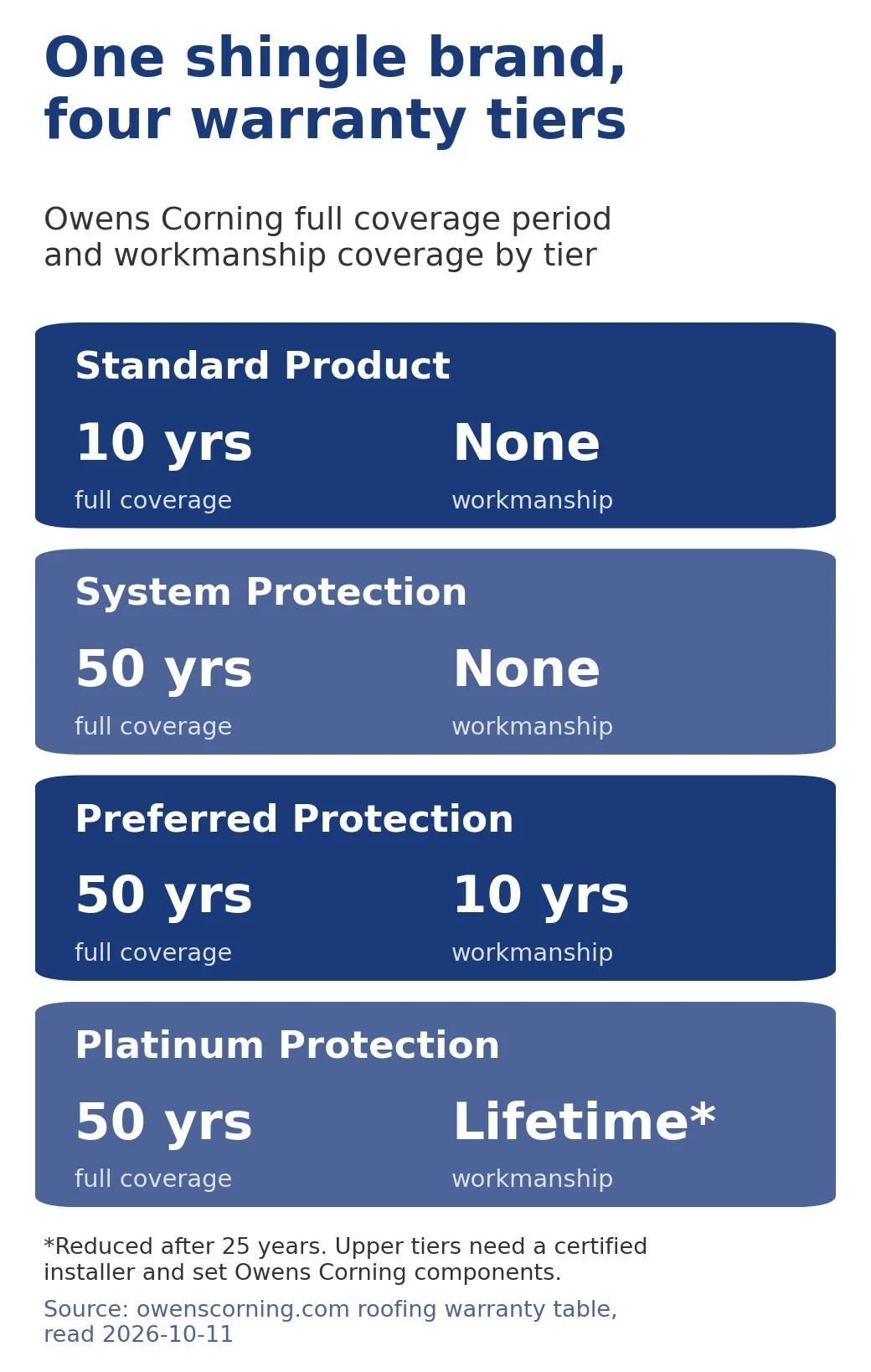
The lesson is not that one brand is better. It is that “lifetime warranty” on a bid tells you almost nothing until you know which tier, which components, and who installs it.
Contractor Workmanship Warranties
A workmanship warranty comes from the contractor, not the manufacturer. It covers errors in how the roof was installed. Many leaks start at installation details: flashing around chimneys, valleys, skylights, and wall intersections, nailing mistakes, and poor sealing at penetrations. As the Owens Corning table shows, a standard manufacturer warranty may include no workmanship coverage at all, so the contractor’s own promise often carries that risk.
A workmanship warranty is only as good as the company behind it. A long promise from a contractor who is no longer in business is worth nothing. When you read one, look for:
- The length of coverage, written into the contract, not just stated verbally.
- What is included: repairs, labor, materials, and any interior damage caused by a covered leak.
- What is excluded, such as storm damage, foot traffic, or problems caused by other trades working on the roof.
- How to make a claim, who to call, and how quickly the contractor responds.
- Whether the warranty transfers to a new owner if you sell the house.
This is where working with an owner-run company matters. At YBR GROUP Inc, work is scheduled directly with the owner, so the person who stands behind the installation is the person you talked to from the first call to the final walkthrough.
Extended and System Warranties
Some manufacturers offer upgraded warranties that combine materials and labor and may cover the whole roofing system, not just the shingles. They go by names like extended, enhanced, or system warranties. They typically require a matching set of the manufacturer’s components, such as underlayment, starter strips, ridge caps, and ventilation products, plus an installer who meets the manufacturer’s qualifications.
- The upgraded warranty usually costs more, because it requires more of the manufacturer’s products and sometimes a registration step.
- The roof must be registered correctly, and missed paperwork can leave you with only the basic coverage.
- Only contractors certified by that manufacturer can offer it. Ask whether your contractor can, and ask to see the actual terms for the product line you are choosing.
Do not accept a verbal promise that a roof “comes with the best warranty.” Ask which warranty, from whom, covering what, and request the document before you sign.
What Can Void or Limit a Roof Warranty
- Poor attic ventilation. Many manufacturers require adequate ventilation, and poor airflow can shorten shingle life and complicate a claim. Our article on attic ventilation for Bucks County roofs explains why.
- Incorrect installation. Wrong nailing patterns, mismatched components, or skipped steps can void manufacturer coverage even if the shingles were fine.
- Layering over existing problems. Installing new material over damaged decking can create issues the warranty will not cover. See roof overlay versus full replacement.
- Unapproved repairs or changes. Having another company cut into the roof, for example to mount equipment, may affect coverage.
- Neglect. Ignoring clogged gutters, overhanging branches, or small leaks can be treated as a maintenance failure.
- Missing registration or lost paperwork. If a warranty requires registration and it never happened, you may not have the coverage you thought you did.
Catching trouble early keeps small issues from becoming warranty disputes. If you are unsure whether your roof needs attention now, read our list of signs you need roof repair before it gets worse.
Questions to Ask Any Roofing Contractor About Warranties
- What warranties come with this job, and who issues each one?
- Can I see the full written terms for both the manufacturer and the workmanship coverage?
- Which manufacturer warranty tier applies, and are you certified to offer it?
- Is any part of the coverage prorated, and does it include tear-off and disposal?
- Does the warranty transfer if I sell my home?
- Who do I call if there is a leak, and how are claims handled?
- Do I need to register anything, and will you handle that for me?
- Are you registered as a home improvement contractor in Pennsylvania, and are you insured?
On that last point, Pennsylvania requires home improvement contractors to register with the Office of Attorney General, and you can look up any contractor’s registration on the state’s home improvement contractor search. YBR GROUP Inc is registered as PA HIC PA099856 and carries $1,000,000 in general liability coverage. A warranty from an unregistered or uninsured business is much harder to enforce.
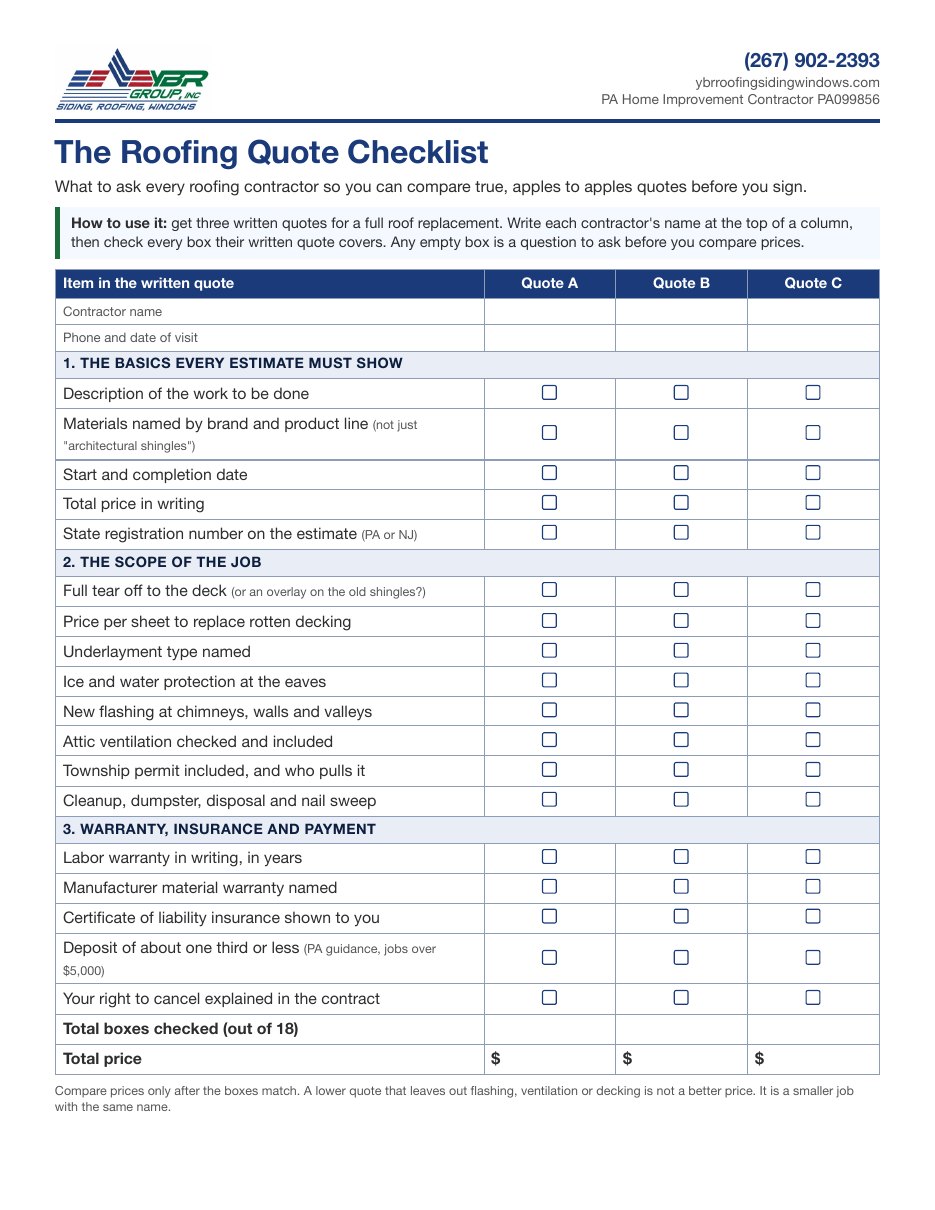
Comparing several bids side by side makes warranty differences easy to spot. Our guides on how many roofing quotes to get, how to choose a roofing contractor in Bucks County, and the broader Bucks County contractor guide cover the rest of that checklist. Two more things worth confirming up front: whether you need a permit for a new roof in Bucks County, and how long a roof replacement takes. For budgeting, see what a new roof costs in Bucks County.
How to Keep Your Roof Warranty Valid After the Job
- Keep every document. Store the contract, warranty certificates, registration confirmations, and receipts in one place, with a digital copy.
- Take photos. Photos of the finished roof give you a record if you ever need to make a claim.
- Schedule periodic inspections. A yearly look, plus a check after severe weather, catches small issues early. Timing for larger work is covered in our guide to the best time to replace a roof in Pennsylvania.
- Keep gutters and the roof surface clear. Debris and standing water shorten roof life.
- Call the installer before anyone else touches the roof. If another trade needs roof access, ask first so your coverage is not put at risk.
- Report problems promptly. Most warranties expect timely notice, and waiting can make a claim harder.
The National Roofing Contractors Association offers homeowner resources on roofing systems and maintenance if you want an independent industry source to read alongside your warranty documents.
Our Experience Helping Bucks County Homeowners
YBR GROUP Inc is a locally owned roofing, siding, and window contractor that has served Bucks County and Southeastern Pennsylvania since 2016. Our team comes to your home for roof repairs and replacements, new siding, and window installation. Because work is scheduled directly with the owner, you deal with the person accountable for the job from the first call to the final walkthrough, and that includes the warranty conversation. As one customer, Loretta A., wrote in an April 2026 Google review: “The work was done on schedule and the crew were very professional.” We are glad to walk through the coverage on your project, in writing, before you commit.
Call (267) 902-2393 Get in touch
Frequently Asked Questions
What is the difference between a manufacturer warranty and a workmanship warranty?
A manufacturer warranty covers defects in the roofing materials, while a workmanship warranty comes from the contractor and covers installation errors. A standard manufacturer warranty may include no workmanship coverage, so get both in writing.
Does a roof warranty cover storm damage?
Usually not. Warranties address defects and installation problems, not sudden damage from hail, high winds, or fallen trees. Storm damage is typically a homeowners insurance matter, so read your policy and warranty terms.
Can a roof warranty be transferred if I sell my house?
Some can and some cannot. Transfer rules differ between manufacturers and contractors, and there may be a process or deadline to follow. Ask before you sign and get the answer in writing.
What does prorated mean on a roof warranty?
Prorated means the amount the warranty pays decreases as the roof ages. Coverage is fuller during the early full coverage period, then the manufacturer pays only part of the cost. Owens Corning, for example, switches to materials only coverage after its 10 or 50 year full coverage period, depending on the tier.
How do I know if a contractor’s warranty is worth anything?
Check that the contractor is registered with the Pennsylvania Office of Attorney General and insured, that the terms are clear and written into the contract, and that the business has a history of finished local jobs you can check. A warranty is only as reliable as the company behind it.
If you are planning a roof repair or replacement and want clear answers about warranties before you commit, call YBR GROUP Inc at (267) 902-2393. We will explain the coverage in plain language and schedule your project directly with the owner.