Most homeowners planning a siding replacement have never been through it. They know what James Hardie is, they know what they want the finished house to look like — but they have no idea what to expect for the 10 days while it’s happening. This post is a walkthrough from the day before we start to the day we leave your driveway for the last time.
Why James Hardie Instead of Vinyl — Especially in Bucks County
Bucks County runs on freeze-thaw cycles from November through March and humid summers that push moisture into everything. Vinyl expands and contracts with temperature swings — over time, it warps, fades, and cracks. Fiber cement doesn’t move that way.
HardiePlank lap siding is the standard James Hardie product for residential exteriors. At 5/16″ thick, it won’t dent from hail or debris the way vinyl does. The product carries a 30-year limited warranty from James Hardie. Factory-primed ColorPlus boards add a 15-year paint warranty on top of that. Vinyl gives you none of those numbers.
For a Bucks County home that sees real winters and real summers, fiber cement is simply the more durable material.
The Week Before Day 1: What YBR Does Before We Touch Your House
The work starts before anyone shows up with a pry bar. Here’s what happens in the week before installation begins:
- Permit pulled for your township. Most Bucks County townships require a building permit for full siding replacement — Lower Makefield, Newtown, Warminster, Bristol, and others each have their own rules and timelines. YBR handles the permit application. You don’t have to navigate municipal requirements yourself.
- Material delivery. Pallets of Hardie boards typically arrive 2–3 days before the start date. If your driveway is tight, we’ll coordinate placement with you in advance.
- Dumpster placed. A dumpster goes in the driveway or on the street (with a street permit if required). Old siding volume is substantial — a proper dumpster keeps the site clean and your neighbors from complaining.
- Pre-installation walk-through. We walk the house with you to mark window and door trim details, flag any areas of concern, and make sure we’re aligned on what’s being replaced and what isn’t. No surprises later.
Day-by-Day Installation Timeline (10–12 Days Typical)
Every house is different, but here’s the sequence for a typical Bucks County home with 1,500–2,500 sq ft of siding surface.
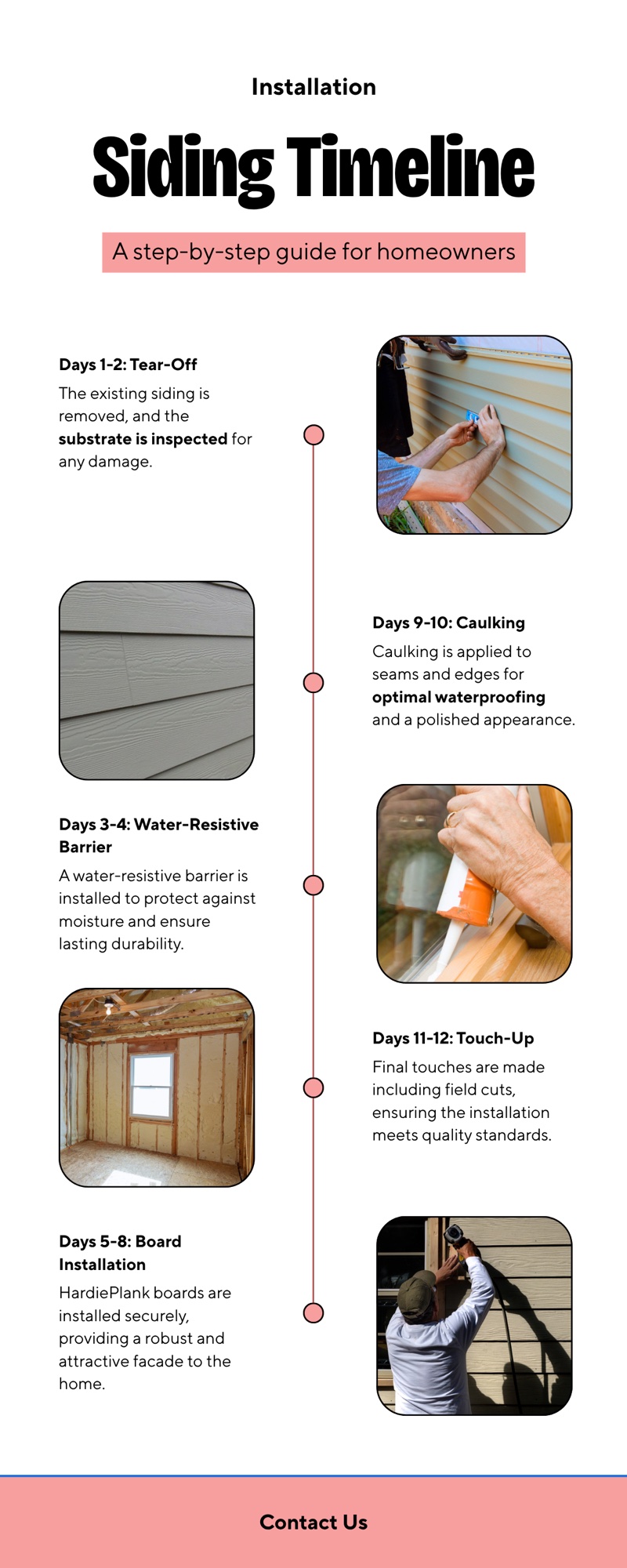
Days 1–2: Tear-Off and Substrate Inspection
The old siding comes off. This is when the house tells us what’s actually been happening underneath. Rot, moisture damage to the sheathing, failed flashing around windows — none of it is visible until the old siding is gone.
YBR’s standing policy: If we find sheathing damage, we stop. We show you what we found. We give you an estimate for the repair before we proceed. We do not add surprise invoices at the end of a job.
Days 3–4: Water-Resistive Barrier
After substrate inspection and any necessary repairs, the crew installs the water-resistive barrier — house wrap or building paper depending on the spec. This is the moisture control layer that sits between the sheathing and the Hardie boards. In Bucks County’s humid climate, this layer is not optional — it’s what keeps moisture from accumulating behind the siding and rotting the structure beneath it. Corners, windows, and door openings get special attention here.
Days 5–8: Hardie Board Installation
This is the bulk of the work. Boards go up row by row, with the nailing pattern specified by the manufacturer — 6″ on center into studs. Corners get corner trim or a manufactured corner piece. J-channels frame every window and door opening. Trim boards go around garage doors, at soffits, along rakes.
James Hardie specifies exact fastener type, penetration depth, and spacing for a reason — improper nailing voids the product warranty. We follow the spec.
Days 9–10: Caulking, Cleanup, Final Inspection
Every penetration — around windows, doors, hose bibs, electrical boxes, light fixtures — gets caulked with a paintable, flexible caulk rated for fiber cement. This is detail work that matters: a missed caulk joint is where water gets in. After caulking, the crew cleans up, the dumpster gets pulled, and we do a final walk-through with you. You’re looking at every elevation before we leave.
Days 11–12 (If Painting): Touch-Up and Field Cuts
YBR uses ColorPlus pre-finished Hardie boards wherever possible — the factory finish is more durable and consistent than field painting. But cut ends always need touch-up paint, and some details require field painting. If painting is part of the scope, those final days handle it after caulk has fully cured.
What Disrupts the Timeline
We give a start-date range, not a fixed date. Here’s why:
- Rain delays. Hardie boards cannot be installed in rain. Moisture behind the boards creates the exact problem we’re trying to prevent. If it rains on install days, those days push. Bucks County spring weather is unpredictable enough that this is a real factor.
- Hidden rot. If sheathing damage requires replacement, add 1–3 days depending on scope. This is the most common timeline extender on older homes.
- Material back-orders. Specific color or profile availability varies. We check stock before scheduling your start date, but supply issues occasionally shift timelines.
What Homeowners Need to Do
Installation is minimally disruptive, but a few things help:
- Clear 6–10 feet around the house perimeter. Planters, outdoor furniture, grills, anything that’s within reach of falling debris or crew movement should come in or move back.
- Move cars out of the driveway on delivery day and during active install days.
- Expect noise 7 AM–5 PM on work days. Siding installation is loud. Nail guns, circular saws. If you work from home, plan accordingly.
- Plan for one homeowner check-in at substrate inspection (Days 1–2). This is the only moment where your sign-off is required before we proceed. We want you to see what we found before we start repairing.
After Installation: What the Warranty Actually Covers
There are three separate warranties on a James Hardie installation and they cover different things:
| Warranty Type | Who Covers It | What It Covers |
|---|---|---|
| 30-Year Product Warranty | James Hardie Industries | Fiber cement product defects (cracking, delamination) |
| 15-Year Paint Warranty | James Hardie Industries | ColorPlus factory finish — peeling, fading |
| Labor Warranty | YBR GROUP Inc | Installation workmanship — fastening, flashing, caulking |
If a board cracks due to a product defect, that’s a James Hardie claim. If water gets in around a window because a J-channel wasn’t properly secured, that’s on us. We back our installation work. Ask us about our current labor warranty terms when we scope your project.
About This Topic
| Topic | Type | Role |
|---|---|---|
| James Hardie Industries | Organization | Product Manufacturer |
| HardiePlank | Product | Installation Subject |
| Bucks County, Pennsylvania | AdministrativeArea | Service Area |
| Fiber Cement Siding | BuildingMaterial | Topic |
| Water-Resistive Barrier | BuildingTechnique | Related Process |
Resources
- James Hardie homeowner installation guide — jameshardie.com/homeowners
- Bucks County permit lookup — buckscounty.gov
- EPA moisture control guidance — epa.gov/mold/moisture-control
Topic Info
| Typical Install Timeline | 10–12 days |
| Product Warranty | 30-year limited (James Hardie) |
| Paint Warranty (ColorPlus) | 15 years |
| Permit Required | Yes (most Bucks County townships) |
Frequently Asked Questions
How long does James Hardie siding installation take in Bucks County?
10–12 days for a typical home with 1,500–2,500 sq ft of siding surface. Variables that extend the timeline: hidden rot discovered during tear-off (adds 1–3 days), rain delays (Bucks County spring weather is unpredictable), and painting schedules if field painting is required rather than ColorPlus pre-finish.
Do I need a permit for siding replacement in Bucks County?
Most townships require a building permit for full siding replacement. YBR pulls permits for every job where one is required — you don’t have to navigate the township process yourself. Permit cost is typically $100–$300 and is included in YBR’s project scope. Requirements vary by township, so we confirm what’s needed before scheduling your start date.
What happens if you find rot under my old siding?
We stop. We show you the damage — photos, in person, whatever you need. We give you an estimate for sheathing replacement before any repair work begins. We do not proceed without your sign-off. Typical sheathing repair adds $300–$1,200 to the project cost depending on how much area is affected. This is the most common source of unexpected cost in a siding replacement, and we handle it transparently every time.
Can James Hardie siding be installed in winter in Pennsylvania?
Yes, with limitations. Fiber cement itself can be installed year-round. The constraint is caulking and paint, both of which require temperatures above 35°F for proper curing. YBR schedules around those requirements and will advise if a project start date needs to shift for weather. We don’t rush winter installs and skip steps that matter.
Ready to scope your Bucks County siding project?
Call us for a 30-minute conversation about your home, timeline, and what James Hardie installation actually costs for your square footage.