You have spent years planting the shrubs along the foundation, keeping the flower beds tidy, and getting the lawn to look the way you want. Then a roof replacement comes along, and a crew will be climbing ladders, tearing off old shingles, and running equipment right beside those plants. It is natural to wonder what happens to your landscaping during a roof replacement, and what will be left when the job is done.
The honest answer is that a roof replacement is messy, loud, and physical work, and the area around your house is part of the work zone. But with planning, most gardens and lawns come through fine. This guide explains what actually happens to your plants, grass, and outdoor spaces, what you can do ahead of time, and how a good contractor protects your yard from start to finish. If you are still comparing contractors, our free roofing quote checklist lists what to ask about cleanup and yard protection before you sign.
Call (267) 902-2393 for a Free Quote
Why Your Yard Is Part of the Work Zone
A roof does not exist in isolation. Everything that comes off the roof has to go somewhere, and everything that goes onto the roof has to be carried up from the ground. That means the space around your home gets heavy use for the length of the project.
Here is what typically happens in the yard during a replacement:
- Old shingles, underlayment, flashing, and nails come off the roof and need to reach a dumpster or trailer.
- New shingle bundles, underlayment rolls, and other materials are delivered and staged near the house.
- Ladders and sometimes lifts or conveyors are set up against the walls.
- Crew members walk back and forth between the work area and the vehicles many times a day.
The plants closest to the house take the most exposure. Shrubs under the eaves, flower beds along the foundation, and anything beneath a downspout are all in the path of falling debris and foot traffic. Lawn areas near the driveway or dumpster spot see the most weight from vehicles and equipment.
Knowing this up front is the first step. Once you see which parts of your yard sit in the work zone, you can decide what to move, what to cover, and what to simply accept as a temporary inconvenience.
Falling Debris and What It Does to Plants
Tear-off is the stage that worries homeowners most, and for good reason. Removing old roofing material creates a steady rain of shingle pieces, granules, dust, and small fasteners. Most of it is directed toward a dumpster, but some will land in the beds and on the grass.
The main risks to plants are:
- Impact damage. Chunks of shingle and dropped tools can snap branches or crush low perennials and small shrubs.
- Granules and dust. Old asphalt shingles shed gritty granules. A light coating on leaves usually washes off, but it can pile up in mulch and soil.
- Sharp metal. Roofing nails and bits of old flashing are the real hazard in a garden bed. They can injure bare feet, paws, and lawn mower blades long after the crew leaves.
- Trampling. Ladders sink into soft beds, and workers sometimes need to step through plantings to reach a wall.
Delicate plants such as hostas, ferns, young perennials, and small ornamental shrubs are the most vulnerable. Mature, woody shrubs and established trees usually handle a few days of disruption without trouble, although low branches near the roofline can be broken if they are not tied back or protected.
How Contractors Protect Your Landscaping
Good protection is not luck. It is a set of habits that a careful crew follows on every job. When you talk with a roofer before the project starts, ask what their plan is for the ground around your home. Reasonable measures include:
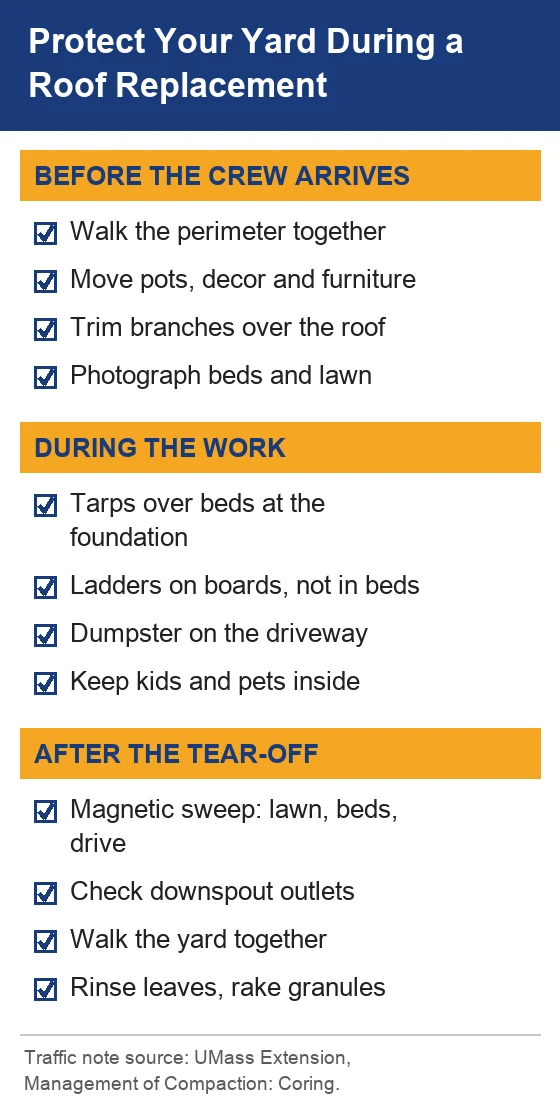
- Tarps and ground covers. Heavy tarps or plywood laid along the foundation catch falling debris and make cleanup far easier. They also keep granules out of mulch.
- Plant covers for delicate beds. Where a bed sits directly under the eave, covering it with sturdy material can prevent impact damage.
- Planned ladder and equipment placement. Setting ladders on hard surfaces or on boards, rather than in the middle of a flower bed, spares your plants.
- A defined dumpster and staging spot. Choosing a location on the driveway rather than the lawn avoids ruts and compacted soil.
- A magnetic sweep at the end. Rolling a magnetic tool over the lawn, driveway, and beds picks up stray nails that the eye misses. The National Roofing Contractors Association, a leading industry group, is a good place to learn about professional practices in general: National Roofing Contractors Association.
At YBR GROUP Inc, you talk directly with an experienced contractor, and roofing, siding and window work is handled by our own team rather than subcontractors. That matters here, because protecting your yard comes down to a clear conversation before work starts. You can point out the rose bush you care about, the garden your family planted together, or the spot where the dog likes to dig during the free inspection, and the team that hears it is the team that does the work.
What You Can Do Before the Crew Arrives
You do not have to wait and hope. A little preparation takes a lot of the risk out of the job, and most of it is simple.
- Walk the perimeter with your contractor. The roofing contractor site visit is the natural time to do this. Point out plants you cannot replace and any irrigation heads, lighting, or garden ornaments near the house.
- Move potted plants and decor. Containers, planters, hanging baskets, garden statues, and bird feeders should go to a safe place away from the house.
- Trim back low branches. Branches that hang over the roof or close to the walls can interfere with the work and get damaged. If a tree needs real pruning, handle that before the project rather than during it.
- Tie up or wrap vulnerable shrubs. Gently tying back loose branches keeps them out of the way of ladders and tools.
- Take photos. A few pictures of your beds and lawn before the job give you and your contractor a shared record of how things looked.
- Clear the drive and lawn edges. Move cars, toys, furniture, and grills so the crew has room and nothing gets crushed.
It also helps to think about timing. Soft, wet ground is easier to rut and compact, and the season you pick affects what is growing in your beds. Our guide on the best time to replace a roof in Pennsylvania covers how weather and seasons play into scheduling, and that is worth reading with your garden in mind.
Lawn, Driveway, and Hardscape Concerns
Plants are not the only things in the yard that need thought. Grass and hard surfaces face their own risks during a roof replacement.
The lawn. Heavy trucks, trailers, and dumpsters can leave ruts, especially after rain. Even without ruts, constant foot traffic can stress grass along the sides of the house. The UMass Extension turf program notes that “a major contributor to poor aeration is soil compaction caused by vehicular and foot traffic,” and it recommends restricting traffic when the ground is soggy or wet. Parking equipment on the driveway instead of the lawn is the simplest fix. If your grass does get compacted or torn, it usually recovers with some aeration, seed, and regular watering.
The driveway. A loaded dumpster is very heavy. If your driveway is older, cracked, or made of pavers or soft material, tell your contractor so they can place boards under the dumpster to spread the weight. Dropped shingle pieces can also scuff surfaces, so a quick sweep afterward is a good practice.
Patios, decks, and walkways. If a patio or deck sits right beside the work area, debris will land on it. Covering furniture and grills, or moving them completely, saves you from cleaning up granules and dust later. Stone walkways can be scratched by dragged ladders, so ask that they be lifted rather than pulled.
Gutters and downspouts. Debris often washes down the downspouts and into drains or onto splash areas. A thorough cleanup should include checking the ground near every downspout outlet.
Cleanup and the Final Walkthrough
How a job ends tells you a lot about the contractor. Cleanup should be a planned part of the project, not an afterthought. A thorough finish includes collecting visible debris from the lawn, beds, driveway, and walkways, running a magnetic sweep for nails and metal pieces, and hauling away all of the old material.
The final walkthrough is your chance to confirm that everything looks right. Walk the full perimeter with the person in charge and look at:
- Flower beds and mulch, where nails and granules like to hide.
- Lawn edges near the dumpster and ladder spots.
- Patios, decks, and steps.
- Gutters, downspout outlets, and window wells.
- Any plants that may have been bent, broken, or buried.
Speak up during the walkthrough if something is wrong. It is far easier to correct a missed nail or a damaged shrub on the same day than weeks later. Because YBR GROUP Inc handles roofing, siding and windows with its own team, from the first call to the final walkthrough, you raise any concern with the same company that did the work.
Once the crew is gone, give your garden some care. Rinse dusty leaves with a hose, rake granules out of the mulch, and water plants that may have been stressed. Most gardens bounce back quickly with a little attention.
Why Local Experience Matters for Your Home and Yard
Protecting a yard is a skill, and it comes from doing many jobs on many different properties. YBR GROUP Inc is a locally owned roofing, siding, and window contractor serving Bucks County and the surrounding Southeastern Pennsylvania area. The team works on homes throughout this region, and that familiarity shows in practical ways: knowing the mix of older homes with mature plantings and newer homes with fresh sod, understanding how local weather affects the ground, and planning around tight lots, sloped yards, and busy driveways.
Because the business is a service-area company, the team comes to your home for roof replacement, new siding, and window installation. YBR GROUP Inc has served homeowners since 2016, offers free inspections and quotes, and in most cases gets you a quote the same day.
If energy upgrades are part of your plans, our guide to Pennsylvania energy rebates in Bucks County explains which programs are open now.
Planning the Project Around Your Whole Property
Protecting your landscaping is one piece of planning a roof replacement well. A few other questions affect how much disruption your yard sees, and it helps to think them through early.
- How long will the crew be on site? A shorter project means less exposure for your plants. Our article on how long a roof replacement takes in Bucks County explains what affects the timeline.
- Do you need a full replacement? Some homeowners consider adding a new layer over the old one. Read about roof overlay versus replacement in Pennsylvania to understand the tradeoffs, since tear-off creates the most debris.
- Is the roof ready to go? If you are not sure, our guide to the signs your roof needs replacement can help you decide, and a roof inspection checklist shows what a contractor looks at. Acting before leaks cause interior and exterior damage can protect your garden beds from emergency work later.
- What about the attic? A new roof is a good time to look at airflow. See our overview of attic ventilation for Bucks County roofs.
- What will it cost and how will you pay? Start with roof replacement cost in Bucks County and then see how to pay for a roof replacement. Setting aside a small amount for replacing a plant or two is a reasonable idea, even if everything goes well.
For shingle products and how they are made, the Asphalt Roofing Manufacturers Association offers helpful general information.
Talk to YBR GROUP Inc about your situation.
Frequently Asked Questions
Will my plants be damaged during a roof replacement?
Some risk is always there, especially for delicate plants right under the eaves. With tarps, careful ladder placement, and a clear plan agreed on before work begins, most plants come through without lasting harm. Tell your contractor about any plants that matter most to you so they can be given extra protection.
Should I move my potted plants and garden decorations?
Yes. Containers, hanging baskets, statues, bird feeders, and patio furniture near the house should be moved to a safe area before the crew arrives. This protects them from falling debris and keeps the work area clear.
How do I know if any nails were left in my yard?
You cannot always see them, which is why a magnetic sweep of the lawn, beds, and driveway is a standard part of good cleanup. Ask your contractor whether they do one, and check the areas near the house yourself during the final walkthrough.
Do I need to trim trees or shrubs before the work starts?
Branches that hang over the roof or crowd the walls should be trimmed back beforehand so they do not get broken or get in the crew’s way. Loose branches on shrubs near the house can also be gently tied back. For larger trees, it is best to have the pruning done before the project begins.
What if my lawn or garden is damaged anyway?
Point it out during the final walkthrough and talk it over with the person in charge of the job. Grass ruts can usually be repaired with seed and watering, and many stressed plants recover with a little care. Take before photos so everyone is working from the same record.
If you are planning a roof replacement and want your yard treated with care, call (267) 902-2393 or get in touch with YBR GROUP Inc. Walk your property with us, tell us what matters most in your garden, and we will talk through a plan from the first call to the final walkthrough.