If you have been putting off a siding project because you are not sure when to schedule it, you are not alone. Homeowners across Bucks County and the surrounding area ask this question every season, and the honest answer is that timing matters more than most people realize. Temperature, humidity, and material behavior all play a role in how well siding installs and how long it lasts once it is on your home. This guide walks through what actually affects siding timing in our Southeastern Pennsylvania climate, so you can plan a project that goes smoothly from the first measurement to the final piece of trim.
Why Timing Matters for a Siding Installation
Siding materials, whether vinyl, fiber cement, or another product, expand and contract with temperature changes. Installers account for this by leaving specific gaps and using fasteners in a particular way, but extreme heat or cold makes the material harder to work with and can affect how well it seats and seals. Adhesives, caulking, and house wrap also perform differently depending on temperature and moisture in the air. A crew that understands these variables can adjust their approach, but there is no substitute for scheduling work during a stretch of weather that lets materials behave the way they were designed to. This is one reason working with an established local contractor matters: a team that has installed siding on homes throughout our area year after year knows how the local climate affects the job at every step, not just in theory but from hands-on experience on homes like yours. YBR Group has served Bucks County homeowners since 2016 as a licensed Pennsylvania home improvement contractor (HIC registration PA099856).
Spring: A Strong Window With Some Tradeoffs
Spring is a popular time for exterior projects in our region, and for good reason. Moderate temperatures make it easier for materials to install correctly, and homeowners like to get projects done before the heat of summer arrives. The tradeoff is that spring is also when many other homeowners have the same idea, which means scheduling can fill up faster and lead times can stretch out. Spring in Southeastern Pennsylvania also brings more rain, which can push back start dates or extend a project if wet weather rolls in during the install. If you want a spring installation, the best approach is to reach out well ahead of time, ideally in late winter, so you can secure a spot before the calendar fills.
Summer: Good Working Conditions With a Heat Caveat
Summer offers long daylight hours and generally dry conditions, both of which help keep a siding project moving without weather delays. The one thing to watch is extreme heat. On very hot days, vinyl siding in particular can become more pliable, and installers need to account for expansion so panels do not buckle later when temperatures shift. An experienced crew knows how to handle this, including installing with the correct nail spacing and slack, but it is worth knowing that summer installs require a bit more attention to technique than a mild spring or fall day would. If you are also considering a james hardie fiber cement product, summer heat is less of a factor since fiber cement does not expand and contract the way vinyl does, which is one more thing to weigh when comparing james hardie versus vinyl siding options for your home.
Fall: Often the Ideal Middle Ground
Many contractors consider fall one of the best stretches for siding work in our region. Temperatures are moderate, humidity tends to drop compared to summer, and materials install predictably without the expansion concerns of peak heat. Fall projects also get your home’s exterior sealed and protected before winter weather arrives, which matters if your current siding has gaps, cracks, or moisture issues that let cold air or water into the walls. If you have noticed signs of trouble with your existing siding, tackling it in fall rather than waiting until spring can prevent a winter of drafts or worse. For homes already dealing with water intrusion, it is worth understanding how to fix siding moisture problems before winter sets in, since trapped moisture only gets worse when temperatures drop and freeze cycles begin.
Winter: Not Impossible, But More Limited
Winter installations are less common, and for good reason. Cold temperatures make vinyl siding more brittle and prone to cracking during handling, and adhesives and sealants do not cure as reliably in low temperatures. That said, winter is not necessarily off the table for every project, especially for repairs, smaller sections, or fiber cement work where the material is less temperature-sensitive. If a section of your siding fails in the middle of winter, whether from storm damage or an aging installation, a qualified contractor can still address it safely with the right precautions. The bigger point is that winter is generally not the season to choose voluntarily for a full siding replacement if you have the flexibility to wait for milder weather.
How Local Climate Patterns Shape the Right Schedule
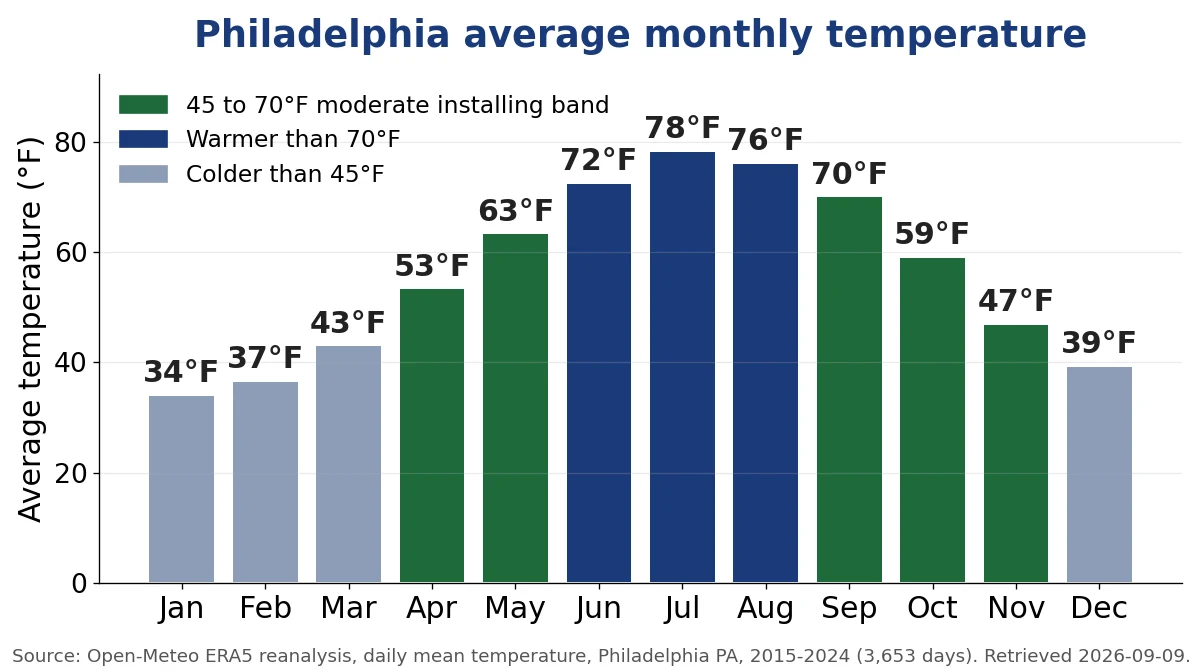
The numbers behind the seasons are steady enough to plan around. Averaged over 2015 to 2024, Philadelphia sits in a moderate 45 to 70 degree band from April through November, climbs past 70 degrees from June through August, and drops below 45 degrees from December through March [Open-Meteo ERA5 reanalysis, Philadelphia PA daily mean temperature, 3,653 days, retrieved 2026-09-09]. That is why spring and fall come up so often: they sit inside the moderate band without the peak heat of midsummer. For local climate background, the National Weather Service office for Philadelphia and Mount Holly publishes the regional records these averages come from.
Southeastern Pennsylvania sees a real range of conditions across the year, from humid summers to cold, sometimes icy winters, with spring and fall serving as transition periods. This variability is exactly why timing advice needs to be specific to our region rather than generic. A homeowner in a drier or more temperate climate might have a wider window of good months, but here, the combination of humidity swings and freeze-thaw cycles narrows the ideal stretch to a more defined period, generally the milder months of spring and fall. Planning around these patterns, rather than around convenience alone, helps ensure the installation holds up the way it should for years to come. This same seasonal thinking applies to other exterior projects too, and if you are weighing a roof replacement alongside your siding work, it helps to know the best time to replace a roof in Pennsylvania so you can coordinate both projects efficiently.
Planning Around Material Choice
The siding material you choose also affects how flexible your timing can be. Vinyl siding is more sensitive to temperature extremes on both ends, which narrows the practical installation window. Fiber cement products, such as those from James Hardie, are more dimensionally stable across temperature swings, which can give you a bit more scheduling flexibility, though wet or freezing conditions still affect how well caulking and finishing work cures. If you are still deciding between materials, it is worth reading through the details on James Hardie siding installation for Pennsylvania homes to understand how the product performs across our seasons, not just how it looks on install day. Choosing the right material for our climate is just as important as choosing the right month.
Coordinating Siding With Other Exterior Improvements
Many homeowners use a siding project as an opportunity to address other exterior needs at the same time, whether that is upgrading windows, repairing roof damage, or dealing with an insurance claim from a storm. Bundling projects can reduce overall disruption to your property and may simplify scheduling with a single contractor rather than coordinating multiple crews. If your siding project is connected to storm damage, it is worth understanding the process for a roof and siding insurance claim in Bucks County early on, since claims can affect your timeline and the materials or approach you are able to use. Thinking through these connections before you schedule anything helps avoid delays once work begins.
Our Experience Installing Siding Across Southeastern Pennsylvania
YBR GROUP Inc is a locally owned contractor that has worked on roofing, siding, and window projects throughout Bucks County and the surrounding Southeastern Pennsylvania area for years. Because the team comes directly to homeowners’ properties for every job, from the first estimate through the final walkthrough, there is a level of accountability and familiarity with local conditions that comes only from doing this work in this specific region season after season. Scheduling is handled directly with the owner, which means the person planning your project timeline is the same person who owns how it turns out. That kind of direct line matters when you are trying to time a siding installation around Pennsylvania’s shifting weather, because decisions about scheduling are made by someone who has seen how local spring rain, summer humidity, fall dry spells, and winter cold each affect a real installation, not just a general weather forecast. You can reach our team directly at (267) 902-2393.
Getting Your Timing Right From the Start
The best time of year to install siding in our area generally comes down to spring or fall, with summer as a solid backup as long as extreme heat is managed correctly, and winter reserved for repairs or urgent situations rather than full replacements. Beyond the calendar, the right timing also depends on your material choice, the condition of your current siding, and whether you are coordinating the project with other exterior work like roofing or window upgrades. Homeowners throughout Norristown and nearby communities face the same seasonal considerations, and it can help to see how these decisions play out for similar projects in the area, including the range of roofing, siding, and window services available in Norristown, PA. Getting the timing right from the start sets the whole project up to go smoothly and last.
Frequently Asked Questions
Is spring or fall really better than summer for siding installation?
Spring and fall generally offer more moderate temperatures and lower humidity swings than peak summer, which makes materials easier to work with and reduces the extra precautions needed for heat-related expansion. Summer can still work well, it just requires more attention to installation technique on very hot days.
Can siding be installed in the winter if I have storm damage?
Yes, repairs and smaller sections can often be handled in winter when needed, though a full replacement is generally better scheduled for milder weather if your situation allows for that flexibility. Urgent damage should still be addressed promptly regardless of season.
Does the type of siding material affect the best time to install it?
Yes. Vinyl siding is more sensitive to temperature extremes because it expands and contracts more than fiber cement products. Fiber cement, such as James Hardie siding, tends to be more stable across a wider range of temperatures, which can offer a bit more scheduling flexibility.
How far in advance should I schedule a siding project?
It is a good idea to reach out at least a season ahead of your preferred installation window, especially for popular times like spring, since scheduling can fill up as more homeowners plan projects around the same mild weather.
Should I replace my roof and siding at the same time?
Many homeowners choose to coordinate roofing and siding projects together to reduce overall disruption and simplify scheduling with one contractor. Whether that makes sense for you depends on the condition of each and your overall timeline and goals.
Request Your Siding Estimate
If you are ready to talk through the right timing for your siding project, or you want to understand how your home’s specific conditions affect the decision, reach out to YBR GROUP Inc. As a locally owned contractor serving Bucks County and the surrounding Southeastern Pennsylvania area, we are ready to walk your property, answer your questions, and help you plan a siding installation that is built around your home and our local climate. Contact us today to get started. Call YBR GROUP at (267) 902-2393 or use the form above to start your estimate.