
When a crew pulls into your driveway for a roof replacement, most of the attention goes to the new roof. But many homeowners have a quieter question while they watch the old shingles come off: where does all of that material go? It is a fair question. A tear off produces a large pile of heavy debris, and how it is handled affects your yard, your driveway, your neighbors and the condition of your property when the job is done.
This guide follows your old shingles from the roof to their final stop. It is written for homeowners in Bucks County and the rest of Southeastern Pennsylvania. You will learn what a tear off removes, how the debris gets from the roof into a container, where asphalt shingles go after the dumpster leaves, what gets separated along the way, and the questions to ask your contractor so nothing is left to chance.
Call (267) 902-2393 for a Free Roof Inspection
What a Tear Off Removes From Your Roof
A tear off means stripping the existing roof down to the roof deck, the layer of wood sheathing that the whole roof sits on. Instead of laying new shingles over old ones, the crew removes the old asphalt shingles, the underlayment beneath them, worn flashing, old vent boots and the nails that held it all in place.
The alternative is an overlay, where a second layer of shingles goes on top of the first. Our guide to roof overlay vs replacement in Pennsylvania covers when each one makes sense. A full tear off produces far more debris, but it gives the crew one thing an overlay never does: a clear look at the bare deck. Soft spots, water stains and rot hide under old shingles. Once the surface is open, those problems can be found and dealt with before anything new goes on. Our article on hidden roof deck damage found at tear off explains how that is priced.
Because a tear off is the messiest part of any roofing job, the plan for hauling and disposal deserves the same attention as the plan for the new roof.
How Much Debris an Old Roof Produces
Roofing debris is heavier than most homeowners expect. Asphalt shingles are made of a fiberglass or felt mat coated in asphalt and covered with mineral granules, which makes them dense. A typical house carries thousands of square feet of shingles, and many older homes in our area have two layers on the roof, which doubles the pile.
Roofers measure roofs in squares. One square equals 100 square feet of roof surface. The more squares and the more layers on your roof, the more material comes off and the larger the container the job needs. That is why a good contractor plans the hauling around weight, not only volume. A container rated for roofing waste is sized and scheduled for the job before the first shingle comes off.
The U.S. Environmental Protection Agency groups this material with construction and demolition waste. On its page on sustainable management of construction and demolition materials, the agency lists asphalt “from roads and roofing shingles” among the bulky, heavy materials in that waste stream, and its national estimates of construction and demolition debris include asphalt shingles alongside concrete, wood and drywall.
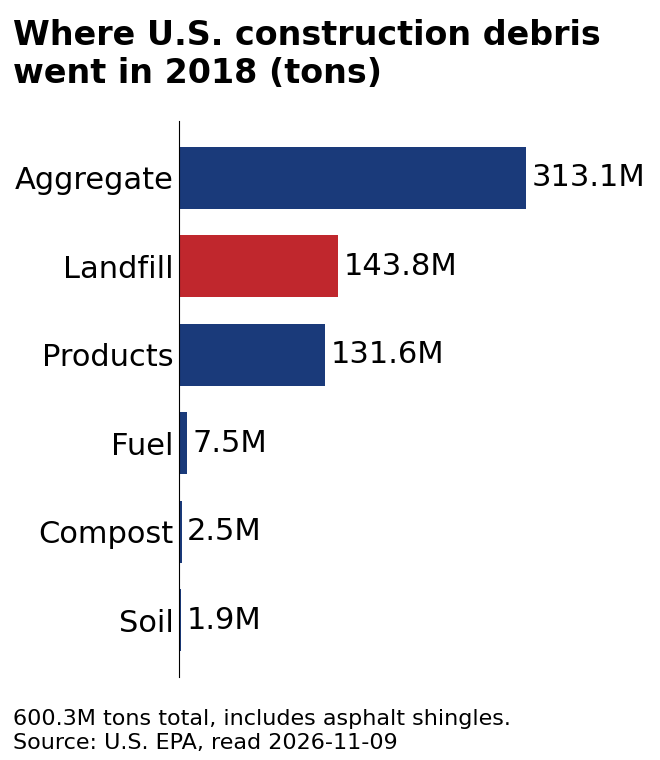
The same EPA data shows where that waste stream ends up. Of the 600.3 million tons of construction and demolition debris generated in the United States in 2018, the agency estimates 313.1 million tons went to aggregate, 131.6 million tons were processed into manufactured products, and 143.8 million tons went to landfills. Processing C&D asphalt into new asphalt mixtures is one of the examples the EPA gives for the manufactured products path.
How Old Shingles Get From the Roof to the Truck
There are a few common ways that old shingles travel from your roof into a disposal container. The method depends on the shape of your roof, how close a container can sit to the house and what is planted or built below the eaves.
Direct Drop Into a Container
When the container can sit right below the work area, crews pull shingles off in sections and drop them straight in. This is the cleanest method because the debris travels the shortest distance and never touches the lawn.
Tarp Drops
On sections where a container cannot get close, a large tarp is laid along the ground. Debris lands on the tarp, then the crew gathers it and carries it to the container. Tarps also catch nails and loose granules that would otherwise end up in the grass.
Hand Carrying
Tight lots, steep slopes and complicated rooflines sometimes mean moving material by hand in smaller loads. It is slower, but it protects what is below.
Protecting the yard during this stage is its own topic. Our guide to what happens to your landscaping during a roof replacement covers covering beds and shrubs, ladder placement and lawn ruts in detail.
Where Old Asphalt Shingles Go After the Dumpster
Once the container is full, it is hauled to a processing or disposal facility. In practice, old asphalt shingles end up in one of two places.
Recycling Into Paving
Asphalt shingles and road pavement share core ingredients: asphalt binder and mineral aggregate. That overlap is why tear off shingles can be ground up at some processing facilities and used in asphalt concrete for paving. Whether your shingles are recycled depends on three things:
- Distance. A suitable processing facility has to be within practical hauling distance of the job.
- Clean loads. Facilities that grind shingles usually want shingle only loads, without large amounts of wood, trash, plastic wrap or metal mixed in.
- Acceptance rules. Each facility sets its own rules for what it takes, and some screen older roofing before they accept it.
A Construction Debris Landfill
If recycling is not practical for a given job, the shingles go to a facility permitted to accept construction and demolition waste. In Pennsylvania, waste handling is regulated by the Pennsylvania Department of Environmental Protection, and haulers and facilities must follow the rules that apply to construction debris.
The single most useful thing a homeowner can do is ask the contractor directly where the old shingles are going. A contractor who handles disposal responsibly will have a plain answer.
What Gets Separated Along the Way
A roof does not come apart as one tidy material. Several different things come off the house during a tear off, and they are not all handled the same way.
- Asphalt shingles: the bulk of the debris, and the part most likely to be recycled where a facility is available.
- Underlayment: the felt or synthetic layer under the shingles. It usually goes out with the general roofing debris.
- Metal flashing, drip edge and vents: metal has scrap value, so these pieces can often be pulled out and taken to a metal recycler.
- Nails: loose nails are a hazard, so they are collected rather than left in the grass or driveway.
- Damaged sheathing: any section of the roof deck that is rotted or soft is removed and handled as construction waste.
- Gutters: if old gutters are replaced at the same time, aluminum gutters are another metal that can go to a scrap recycler.
The roofing material you choose today is the debris of the future. Metal roof panels, for example, are typically recyclable as scrap at the end of their life. If you are weighing materials, our comparison of metal roofing vs asphalt shingles in Pennsylvania covers how they differ, and our guide to asphalt shingle types for Bucks County homes explains the shingle styles.
Nails, Magnets and the Final Cleanup
The shingles are only part of the mess. Nails cause the most trouble after a job because they are small, they scatter and they puncture tires, feet and paws.
A careful crew finishes a tear off with a full sweep of the property. A common practice is rolling a magnetic sweeper across the driveway, walkways, lawn edges and the strip along the foundation to pick up stray nails. Gutters are checked for granules and shingle pieces, since old asphalt shingles shed gritty mineral granules that settle there.
Here is what a good final cleanup looks like from the homeowner’s side:
- No loose shingle pieces in the lawn, flower beds or along the foundation.
- No nails in the driveway, walkways or garage entrance.
- Gutters free of debris from the old roof.
- The container removed, with no damage to the driveway surface.
- Tarps and covers taken down and hauled away.
It is reasonable to walk the property with the crew at the end of the job and point out anything that was missed. The roof replacement timeline guide shows where cleanup fits in the schedule.
Older Roofs and Special Materials
Most modern asphalt shingles are simple to dispose of, but older homes can raise extra questions. Some roofing and building products made in past decades contained asbestos, which is now regulated. Asbestos was used in some older roofing felts, cement roofing shingles and flashing compounds. You cannot tell by looking whether a material contains it.
If your home is older, or if the existing roofing is not standard asphalt shingle, ask before removal starts whether testing or special handling is needed. The EPA publishes guidance on asbestos in building materials, and your contractor should know what applies to your project and who handles it.
Questions to Ask Before You Sign
Disposal should be written into your contract, not left to a handshake. Pennsylvania’s Home Improvement Consumer Protection Act requires home improvement contracts to be in writing and to describe the work, so hauling and cleanup belong in that description. Our guide on how to read a roofing estimate line by line shows where to find these items. Before you sign, ask:
- Is hauling and disposal of the old roof included in the price?
- Where will the old shingles go, and is recycling available for this job?
- How many layers are on my roof now, and does that change the price?
- Where will the container be placed, and how will my driveway be protected?
- When and how will you sweep for nails?
- Who do I call if I find debris after the crew leaves?
The answers tell you a lot about how a company works. Vague answers about disposal are a warning sign. Our roof inspection checklist and the guide to choosing a roofing contractor in Bucks County cover the other questions worth asking.
Why the Part Nobody Sees Matters
Disposal is not glamorous and it rarely shows up in a brochure, but it is one of the clearest signs of whether a roofing company is organized and accountable.
YBR GROUP Inc has installed roofs, siding and windows since 2016 for homeowners within about 70 miles of Southampton, PA, including Bucks County. The company holds Pennsylvania home improvement contractor registration PA099856, carries $1,000,000 in general liability insurance, and does not use subcontractors, so the crew that tears off your old roof is the same company that installs the new one and cleans up after it. When you call, you talk directly with an experienced contractor, and inspections are free. You can learn more on our about page or see the full list of roofing services.
Frequently Asked Questions
Are old asphalt shingles recycled?
Sometimes. Asphalt shingles can be ground up and used in asphalt paving because they share the same core ingredients, asphalt and mineral aggregate. Whether yours are recycled depends on whether a processing facility is close enough and accepts the load. If not, they go to a facility permitted for construction and demolition waste. Ask your contractor where your shingles will go.
Do I have to rent the dumpster myself?
Usually not. Hauling and disposal are normally part of the roofing contractor’s job and should be written into the contract. Confirm this before work starts so there is no surprise about who hauls away the debris.
How do you make sure no nails are left in my yard?
A careful crew sweeps the property when the work is done, usually with a magnetic sweeper across the driveway, walkways and lawn edges. Gutters are checked for shingle pieces and granules. For extra reassurance, walk the property with the crew at the final walkthrough.
Can old shingles be reused on another roof?
No. Worn shingles have lost much of their protective granule surface and flexibility, and they are not suitable to put back on a roof. The material is better suited to recycling into paving where that option exists, or to proper disposal.
Does a tear off make more mess than an overlay?
Yes. A full tear off produces more debris because everything comes off the roof down to the deck. The benefit is that the crew can inspect the roof deck and replace damaged sheathing before the new roof goes on, which is why many homeowners choose it.
If you are planning a roof replacement and want a clear answer on how your old shingles will be handled, call YBR GROUP Inc at (267) 902-2393 or contact us online. We will walk the property with you, explain the tear off and cleanup plan, and put it in writing.