You call a roofer about a leak, a worn patch of shingles, or a roof that is simply getting old. Then the inspector climbs into the attic and comes back down with news you did not expect: there is mold in the attic. That moment brings a rush of questions. Is it dangerous? Is the roof to blame? Will a simple job turn into a big one? And who is supposed to fix it?
The short answer: mold in the attic is usually a symptom of a moisture problem, not a problem on its own, and it is handled in a clear order. This guide is written for homeowners in Bucks County and the rest of Southeastern Pennsylvania. It walks through what a good roofer does when mold turns up, how serious it is, what order the repairs go in, and the questions to ask before anyone sprays anything.
Call (267) 902-2393 for a Free Roof and Attic Inspection
Why Mold Grows in the Attic in the First Place
Mold is a fungus. It needs spores, which are everywhere, something to feed on, and moisture. An attic supplies the food for free: roof sheathing, rafters and framing are all wood. That leaves moisture as the one ingredient you can control. The U.S. Environmental Protection Agency puts it in one line: “The key to mold control is moisture control.” Every sound plan for mold in the attic starts by finding where the water comes from.
In our area, the usual moisture sources fall into a few groups:
- Roof leaks. Failed flashing, a cracked pipe boot or damaged shingles let rain and snowmelt reach the roof deck and the insulation below it. Our guide to roof leaks in Bucks County covers the common entry points.
- Warm, humid indoor air rising into the attic. Showers, cooking and laundry add water vapor to the living space. Air that escapes through gaps around light fixtures, the attic hatch or plumbing openings carries that moisture up.
- Weak ventilation. An attic that cannot exhale traps humid air. In winter the vapor reaches its dew point on the cold underside of the roof deck and condenses into water.
- Bathroom or dryer vents that end in the attic. The EPA advises venting moisture producing appliances such as clothes dryers “to the outside where possible.” A fan or dryer duct that dumps warm, wet air into the attic is a classic cause of mold on the roof sheathing.
- Blocked soffit vents. Insulation pushed against the eaves can seal off the intake vents that let fresh air in.
Pennsylvania gives an attic cold winters, humid summers and plenty of swings in between, so moisture stress here is a four season issue. For the airflow side in detail, read our guide to attic ventilation in Bucks County, PA.
What a Good Roofer Does When Mold in the Attic Turns Up
A good roofer neither scares you nor brushes the finding off. When mold appears during an inspection, a professional should take a few specific steps.
Show You What They Found
You should see photos, or be shown the area directly, with a plain explanation of where the mold is, how far it spreads and what it is growing on. Our article on what a roofing contractor site visit includes explains how the attic fits into a normal inspection.
Look for the Moisture Source
The mold is the evidence. The cause is the real finding. The inspector should check the roof deck from above and below, the flashing, the roof vents, the insulation and the bathroom and dryer ducts. The same points appear in our Bucks County roof inspection checklist.
Separate Roof Causes From House Causes
A leaking roof or a vent system that cannot move air is roofing work. A house that is simply too humid inside, or an HVAC problem, belongs to another trade. A clear answer on which is which keeps you from paying the wrong company to treat the wrong problem.
Tell You Plainly What Is in Their Scope
Roofing contractors replace roofs, roof decks, flashing and ventilation. Large scale mold cleanup is usually the job of a separate remediation company. An honest roofer says so up front.
How Serious Is Mold in the Attic, Really?
Not all attic mold is equal. Some of it is light surface growth on the underside of the deck near the eaves, the kind of staining that builds over a few damp winters. Other cases involve wet insulation, dark soft wood and a leak that has run for years. Soft or crumbling wood points to wood decay fungus, which weakens the deck itself.
The EPA gives homeowners a size rule. If the moldy area is “less than about 10 square feet (less than roughly a 3 ft. by 3 ft. patch), in most cases, you can handle the job yourself.” Above that, or after a lot of water damage, it points you toward a professional. It also says to “dry water-damaged areas and items within 24-48 hours to prevent mold growth.” You can read the agency’s full Brief Guide to Mold, Moisture and Your Home.
A practical way to sort what you are looking at:
- Light and local: small patches of surface mold on the sheathing, usually tied to condensation or weak airflow. Correcting the ventilation and cleaning the wood often settles it.
- Moderate: mold across a larger section of the deck, possibly with damp or flattened insulation. The moisture source needs a proper fix, and cleanup may need a specialist.
- Severe: wide growth, soft or rotted wood, or signs of a long running leak. Sections of the roof deck may need replacement, and cleanup belongs with professionals. Our guide to hidden roof deck damage and change orders explains how that is priced.
A roofer can help you see which group you are in, but a roofer is not a mold tester. If you have health concerns, the EPA guide says to “consult a health professional” and suggests your state or local health department.
The Order of Repairs: Fix the Moisture Before the Mold
This part surprises many homeowners. Cleaning mold off the wood without fixing the moisture is like mopping under a running faucet. The EPA guide is direct about it: “If you clean up the mold, but don’t fix the water problem, then, most likely, the mold problem will come back.”
A sensible sequence:
- Stop the water. Fix the leak, replace failed flashing, seal roof penetrations, and reroute any fan or dryer duct that ends in the attic.
- Fix the airflow. Open the soffit intakes and make sure the ridge or roof exhaust vents work with them, not against them.
- Replace what is damaged. Wet insulation and any sheathing or framing that is no longer sound come out.
- Clean or remediate. Once the attic is dry and the cause is corrected, the mold itself is handled by the right professional.
- Check again. Look at the attic after the next stretch of rain, cold or humid weather to confirm it stays dry.
Skipping straight to step four is the most common mistake. It looks like progress and leaves the cause in place.
When Ventilation Is the Real Cause
An attic needs fresh air coming in low, at the soffits, and warm moist air leaving high, at the ridge or roof vents. When that flow is weak or blocked, humidity lingers. In cold months it condenses on the underside of the roof deck. In warm months trapped heat and moisture make a damp, stuffy space that is hard on both the asphalt shingles above and the framing below.
The building code sets a minimum amount of vent area. Under the International Residential Code (2021) section R806.2, the base rule is 1 square foot of net free vent area for every 150 square feet of attic floor, or 1 for every 300 when the system is balanced between high and low vents.
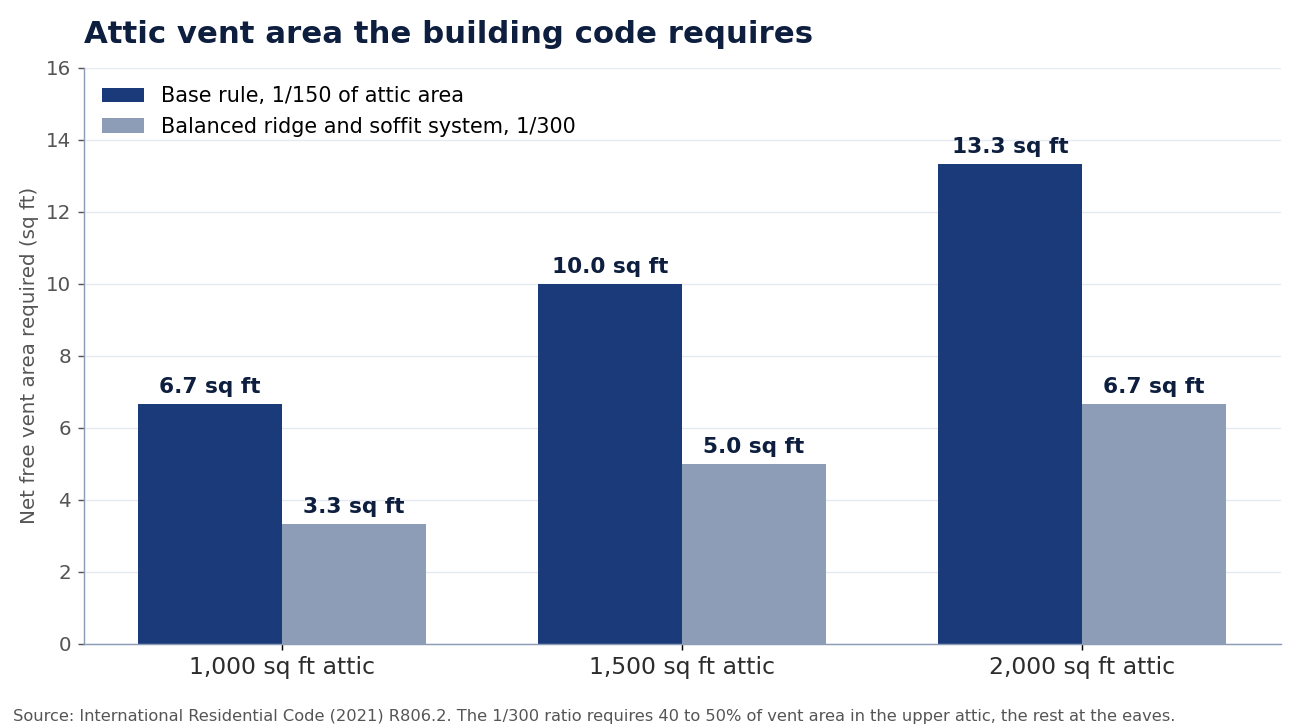
Common ventilation problems behind mold in the attic:
- Soffit vents covered by insulation or paint
- Too little exhaust vent area for the size of the attic
- Mixed exhaust vent types that short circuit the airflow
- Bathroom fans or dryers ducted into the attic instead of outside
- Gable vents competing with a ridge vent
Summer matters as much as winter here, and we cover it in our article on attic ventilation and summer heat in Pennsylvania. If your roofer finds mold, ask directly whether ventilation played a part. If it did, correcting it is one of the most valuable fixes you can make.
What Mold in the Attic Means for Your Roof Replacement Plans
If you were already planning a new roof, the discovery can work in your favor. A replacement is the best time to correct hidden problems, because the old shingles are off and the whole deck is open for inspection. The crew can replace damaged sheathing and set up a ventilation system sized for the attic instead of working around the old one. Our guides to the signs a roof needs replacement and roof replacement cost in Bucks County help you weigh that decision.
If you only asked for a small fix, a mold finding may change the conversation. A patch over a deck that has been damp for years may not last. An honest contractor tells you when a small fix makes sense and when it only hides the problem. Energy upgrades such as added insulation can also qualify for incentives; our Pennsylvania energy rebates guide lists the programs, and qualification depends on each program’s rules.
Why Homeowners Call YBR GROUP Inc About Mold in the Attic
A roof, its flashing, its vents and the insulation below work as one system, and the best fixes come from people who look at that system every working day. YBR GROUP Inc has served homeowners since 2016, is registered as a Pennsylvania home improvement contractor (PA099856), and carries $1,000,000 in general liability coverage. Roofing projects are handled by our own crew, with no subcontractors, and every job is a complete system rather than a patch.
When you call, you talk directly with an experienced contractor. Inspections and quotes are free, and if no work is needed, we tell you so. Customers mention the follow through in their Google reviews: Loretta A. wrote that “the work was done on schedule and the crew were very professional,” and Jason R. noted the crew “cleaned up once they were done each day.”
We are also clear about what we do not handle. If your attic needs a mold remediation company, we say so plainly and focus on the roofing and ventilation work that keeps the moisture from coming back. Learn more about YBR GROUP Inc or see our roofing services.
Questions to Ask Your Roofer After a Mold Finding
Whoever you hire, these questions show how complete the plan is:
- Where exactly is the mold, and can you show me?
- What is causing the moisture?
- Is the roof deck still sound, or is any of it soft?
- Is the insulation wet, and does it need replacing?
- Does my attic have enough intake and exhaust vent area?
- Which parts are roofing work, and which need another specialist?
- How will we confirm the problem is solved afterward?
Clear, specific answers are a good sign. Vague answers, pressure to sign on the spot, or a plan that only sprays the mold are reasons to pause and get a second opinion. Our guide to choosing a roofing contractor in Bucks County covers the rest of the screening.
Frequently Asked Questions
Does mold in the attic mean I need a new roof?
No. Mold in the attic can come from a roof leak, but it also comes from weak ventilation or a fan or dryer that vents into the attic. A proper inspection finds the cause first. Sometimes a ventilation fix is enough, and sometimes the roof deck is damaged enough that replacement makes sense.
Can I clean attic mold myself?
The EPA says that if the moldy area is less than about 10 square feet, in most cases you can handle the job yourself, with gloves, goggles and an N-95 respirator. Cleaning alone does not stop regrowth while moisture is still present, so fix the source first. For larger areas or after heavy water damage, use a professional.
Will my roofer remove the mold?
Roofing contractors fix the causes of most attic mold: leaks, flashing, damaged sheathing and ventilation. Full mold remediation is usually done by a separate remediation company. A good roofer tells you which parts they handle and helps you plan the rest.
Can poor attic ventilation really cause mold?
Yes. When humid air cannot escape, it condenses on the cold roof deck in winter and lingers in warm weather, creating the damp conditions mold needs. Open soffit intakes and enough exhaust vent area keep the attic dry.
What should I do first if my roofer shows me mold?
Ask to see the affected area, ask what is causing the moisture, and ask for a written plan that puts the moisture repair first. Avoid any plan that only treats the mold surface without fixing where the water comes from.
If an inspection turned up mold in the attic, or you suspect your attic is holding moisture, call YBR GROUP Inc at (267) 902-2393 or contact us online. We look at the roof, the ventilation and the attic as a whole, explain what we find in plain language, and tell you the right order of repairs.